CSMA welcomed Germán López to Tateuchi Hall on Saturday, March 5 2022 for a livestreaming event only available on CSMA’s YouTube channel. López is one of the most brilliant and prolific young timple players of his time. His original, instrumental music honors Canary Island folk music traditions, embracing Spanish Flamenco, West African rhythms, jazz and “island music” of today. He will be joined by guitarist Antonio Toledo for a Canarian musical celebration.
We spoke with Germán to learn more about him and what the audience can expect from his livestreaming performance from Tateuchi Hall.
Germán López
Tell us a little about yourself. How did you begin playing and performing music?
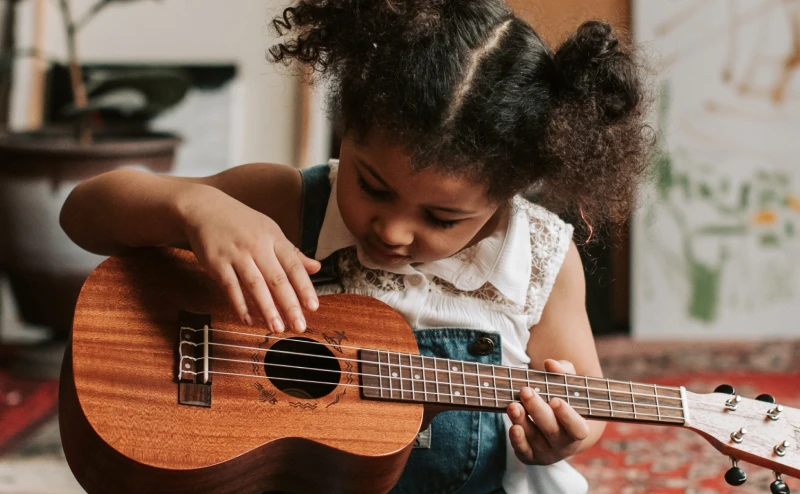
I started studying music on a casual level when I was five years old. I wanted to study guitar, but the instrument was too big for my size so I started with the timple. In the Canary Islands, it’s very common to study the timple since it’s our most representative and popular instrument, and many folks (young and old) have a timple! Maybe in some ways like many folks in Hawaii have access to a ukulele.
Shortly after I started studying the timple I met José Antonio Ramos who is perhaps the greatest and most beloved modern timple player. It was serendipitous that I had the opportunity to study with him. He had an immense influence on me and fostered my love of music. At a young age, I had a very clear vision of wanting to be a musician when I grew up. Now I’m living that dream of being a musician and making a living from music. Having the opportunity to tour in the US is a real dream for me.
Did you have access to music education in school?
Most schools in the Canary Islands provide music education, but the studies can be very elementary. I was very precocious as a child and had a supportive family that allowed me to study music privately with timple maestro José Antonio Ramos, as well as classical piano at the conservatory in Las Palma. Being a musician is a long and demanding career, but a rewarding one!
Tell us about the musical culture of the Canary Islands.
Just in case anyone doesn’t know, the Canary Islands are part of Spain, but they are off the coast of North Africa (a three hour flight from the capital Madrid). A lot of people are just starting to discover that the Canary Islands have incredible cultural wealth. They are literally (and culturally) a bridge between Europe, Africa and the Americas, especially Latin America, since the Canary Islands used to be the last stop on the European continent for ships to dock before going to the Caribbean and other parts of the Spanish empire. As a result, there has been a lot of migration between the Canary Islands, Europe and the Americas, and the influences have gone in all directions.
Our traditional Canary Island folk music picks up all of this cultural mix very well. It has many connections with Europe (mazurkas, polkas, folías from Portugal, flamenco from Spain), but with the Americas as well. Our own music has been influenced by Punto Cubano from Cuba, la Décima from Puerto Rico, as well as Mexico and Venezuela. If you listen to traditional Canary Island folk compared with traditional Mexican folk music, you hear uncanny connections.
One of the interesting things about the timple in the history of the musical culture of the Canary Islands is that it used to be considered a background instrument, especially for singers. Timple players like my teacher, José Antonio Ramos, paved the way for us to view the timple as a leading instrument. That’s the heritage I really tap into with the music that I compose and perform.
What do you like most about the timple?
I love its rhythmic and melodic richness, as well as having a sweet sound, despite it being so sharp. Because of the unique design of the timple, it actually is quite resonant for its small size. There is a hump on its back, unlike a ukulele for comparison, and it has an extra high D string, tuned gcEAD. It’s very fun to play the timple and adapting it to new music is a continuous challenge and passion for me.
What advice do you have for aspiring musicians?
Passion, patience and discipline. Music can make you very, very happy and I think that kind of happiness is what we all live for. But in order to have that life, you need to work very hard every day. Never underestimate the value of your hard work and tenacity!
What can the audience expect during your livestreaming performance from Tateuchi Hall?
The music that Antonio Toledo and I perform is a mixture of many influences that we both like to listen to as musicians. We like to improvise, we like flamenco and jazz, we like both precision and flexibility. I compose most of the music we perform, but each concert is quite different from another because we improvise and play off of the energy we find in the room.
Playing with a guitarist like Antonio Toledo is a luxury. It’s impressive to watch and to listen to him and I learn every day alongside him. For the timple and for myself, it’s very interesting and fun to make the music that we do. Hopefully, we can share this emotion with the people that listen to us.
Anything else you would like to share with us?
I want to thank the American public for being so loving and appreciative of our music. This is the sixth time that I’ve traveled to the US to tour, and the treatment, respect, interest and affection that we’ve been given have always been wonderful. It’s very special for an island musician like myself to go to a country as big and varied as the U.S. and to receive so much love for the work that we do, so touring and doing so many concerts all over the country is very exciting.
Of course, I also want to take this moment to thank my entire team: Jeito in the Canary Islands and especially Greg Kastelman from Unbound Artists, for their constant support and for making these tours happen in such difficult times that we’re living in. I alone could not do anything without my team.
Watch Germán López’s performance on our YouTube channel.