The best adult ceramics class in Mountain View will depend on what you’re looking for: beginner instruction, a regular studio practice, or something in between. A few key factors separate genuinely good programs from ones that leave students frustrated: class size, what’s included in the price, instructor experience, and whether the program is designed to help you actually develop skills over time.
At the Community School of Music and Arts (CSMA), we’ve offered adult ceramics classes for years and work with students at every skill level. We’ve also seen firsthand what makes students stay and grow. This guide covers what to look for when evaluating your options locally.
Why Adults Are Drawn to Ceramics Right Now
Ceramics participation has grown significantly over the past several years. The National Endowment for the Arts’ 2022 Survey of Public Participation in the Arts found that around 8.9% of U.S. adults were engaged in pottery, ceramics, or jewelry-making, up from roughly 7% in 2017.
The appeal is easy to understand. Working with clay is tactile and absorbing in a way that most screen-based activities aren’t. A 2016 Drexel University study found that cortisol levels dropped in 75% of participants after 45 minutes of art-making that included clay work, with no significant difference between beginners and experienced artists. Research published in Frontiers in Psychology in 2024 reached similar conclusions, finding that ceramic art-making produced measurable reductions in anxiety among participants.
The practical takeaway: you don’t need a background in art to benefit from taking a ceramics class. Most adults who enroll are complete beginners.
What to Look for in an Adult Ceramics Class
What the tuition actually covers
Ceramics involves materials and equipment that add up quickly: clay, glazes, kiln firings, and studio space. Before enrolling anywhere, confirm exactly what’s included.
Some programs charge a base tuition and then bill separately for clay, bisque firing, and glaze firing. Others include everything. The difference matters because a class advertised at a lower price can end up costing more once materials are factored in.
At CSMA, all ceramics classes include materials and firing in the tuition. There are no add-on fees for using the studio’s clay, glazes, or kilns. In addition, there is no need to buy tools since all basic items, from sponges to trimming tools to decorative items, are available in the studio.
Class size
The ideal class size for ceramics instruction is small. With fewer students, instructors can give hands-on guidance at the wheel, catch technique issues early, and tailor feedback to where each student actually is.
Look for programs that cap enrollment at 10 to 12 students per class. Larger classes can work for open studio formats, but for structured instruction, smaller is meaningfully better.
Instructor experience
Ceramics instruction requires both technical expertise and the ability to teach it clearly. A good instructor will have their own active practice in addition to teaching experience, and they’ll be able to work with students at different levels without defaulting to a one-size-fits-all approach.
When evaluating a program, it’s worth asking whether instructors are working artists and what their background includes.
Class structure and skill progression
Adult learners vary widely in what they want from a ceramics class. Some want a structured curriculum that moves through foundational techniques in sequence. Others prefer a more open format where they can work on their own projects with instructor guidance available.
Neither approach is better in the abstract, but knowing which style suits you will help you choose the right program. Structured classes typically work better for complete beginners. Open studio or advanced classes work better for students who already have a foundation and want to refine specific skills.
Also ask how long the course runs. A one-session workshop gives you a taste of clay but won’t build lasting skill. Programs running eight to twelve weeks give you enough time to develop real technique and complete finished pieces.
What happens when the class ends
The best adult ceramics programs are designed for ongoing participation. Students who’ve completed an introductory course should have a clear path to continue, whether that’s an intermediate class, a more open studio format, or both.
Questions to Ask Before You Enroll
| Question | Why It Matters |
|---|---|
| Does tuition include clay, glazes, bisque firing, and glaze firing? | Hidden materials costs are common and can add significantly to the real price |
| How many students are in each class? | Smaller classes mean more hands-on instructor time |
| What techniques are covered? | Wheel throwing and hand-building require different skills and equipment |
| How many weeks does the class run? | Longer sessions allow for genuine skill development |
| Is there a continuation path after the introductory course? | Indicates whether the program is designed for long-term development |
| Does the instructor maintain an active ceramics practice? | Working artists bring current technical knowledge into the classroom |
| How long after the class ends will my pieces be ready? | Firing timelines vary; knowing this upfront avoids surprises |
| Is financial aid or payment plans available? | Relevant if cost is a consideration |
Youth, Teen and Adult Ceramics Classes at CSMA in Mountain View
CSMA’s ceramics studio is located at the Finn Center at 230 San Antonio Circle in Mountain View, a facility purpose-built for arts education and designed by Mark Cavagnero Associates. The studio is spacious and well-lit, with dedicated space for both hand-building and wheel work.
Current adult class options:
· Ceramics Studio for students learning core techniques, including pinching, coiling, slab rolling, and wheel throwing
· Ceramics Studio II for students continuing to develop their practice
Both classes are capped at 12 students and include all materials and kiln firings in the tuition. You can view current class options and pricing on the CSMA website.
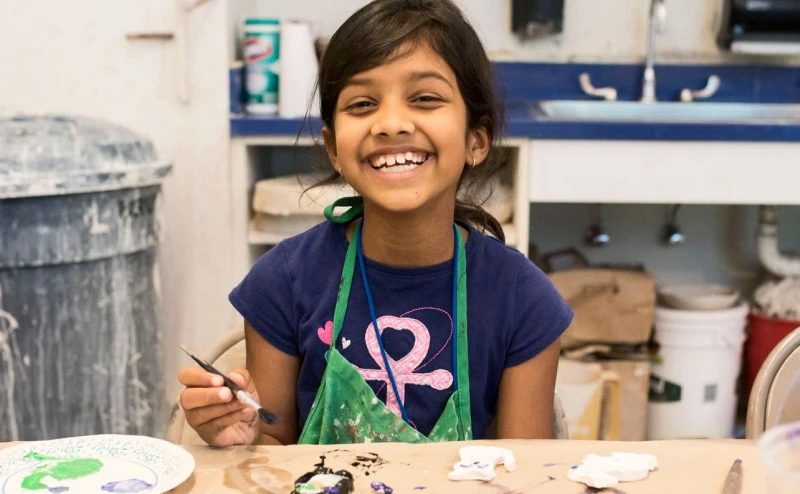
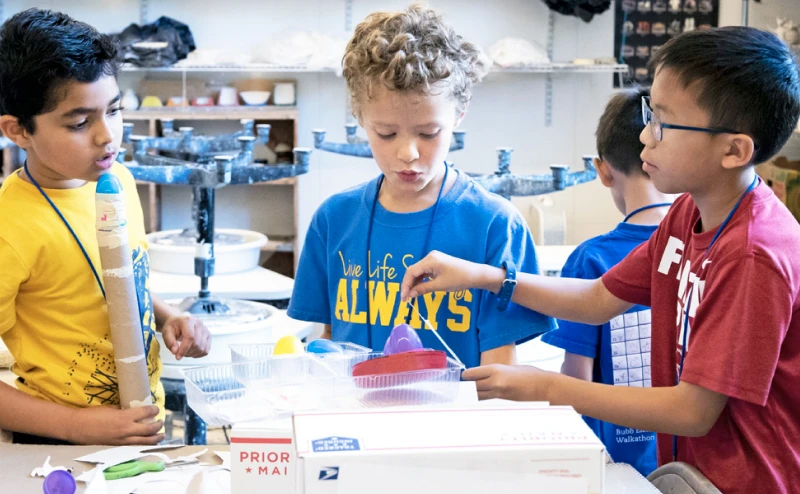
For those who want a longer immersive experience, CSMA also offers 10-day ceramics camps during the summer for students ages 8 through 15.
Faculty are professional artists with active practices. Instructors approach the studio as a space where students can develop their own work, not just follow a prescribed set of projects.
Financial aid
CSMA offers need-based financial aid for all art classes, including ceramics. Aid is based on family size and income using HUD guidelines. Payment plans are also available. The goal is to make sure cost doesn’t prevent someone from participating.
Frequently Asked Questions
Do I need any prior experience to take an adult ceramics class?
No. Most adult ceramics students are beginners. CSMA’s introductory ceramics classes start from scratch and don’t assume any prior experience.
Are clay and firing costs included in the tuition?
It depends on the program. At CSMA, all materials and kiln firings are included in the class fee, with no additional charges. Not all programs work this way, so it’s worth confirming before enrolling.
How long does it take to make a finished piece?
From forming to glazed and fired piece, the process typically spans several weeks. Bisque firing and glaze firing each require time in the kiln, so most finished pieces are ready toward the end of the class session or shortly after.
What’s the difference between hand-building and wheel throwing?
Hand-building techniques, including pinching, coiling, and slab construction, don’t require a potter’s wheel and are often a good starting point for beginners. Wheel throwing uses a spinning wheel to center and shape clay and involves more technical coordination. Many adult programs cover both.
Ready to Start?
If you’re in Mountain View and looking for adult ceramics classes, you can view CSMA’s current offerings and available sessions at arts4all.org/ceramics.
Registration is open throughout the semester, and the Student Services team can help match you with the right class for your experience level and schedule.